

Introduction
The educational environment plays a pivotal role in supporting the learning process and achieving psychological and physical comfort for both students and educators. Among the most important elements of this environment are the floors, which act as a fundamental component that influences cleanliness, safety, noise levels, and the overall aesthetics of the place.
In this context, educational vinyl flooring emerges as a smart and modern option that meets the various needs of educational institutions, from nurseries and elementary schools to universities and institutes.
We will highlight the advantages of vinyl flooring, why it has become the best solution for educational institutions, as well as the criteria for choosing it, its types, and its impact on the quality of education and the safety of learners.
What Is Educational Vinyl Flooring?
Vinyl flooring is a type of industrial flooring made from PVC (polyvinyl chloride). It is characterized by its flexibility, water resistance, and easy cleanability.
When we talk about educational vinyl, we refer to a specific type of vinyl flooring designed especially to suit school environments, where heavy movement and high friction occur, while taking into consideration factors of safety, health, and acoustic comfort.
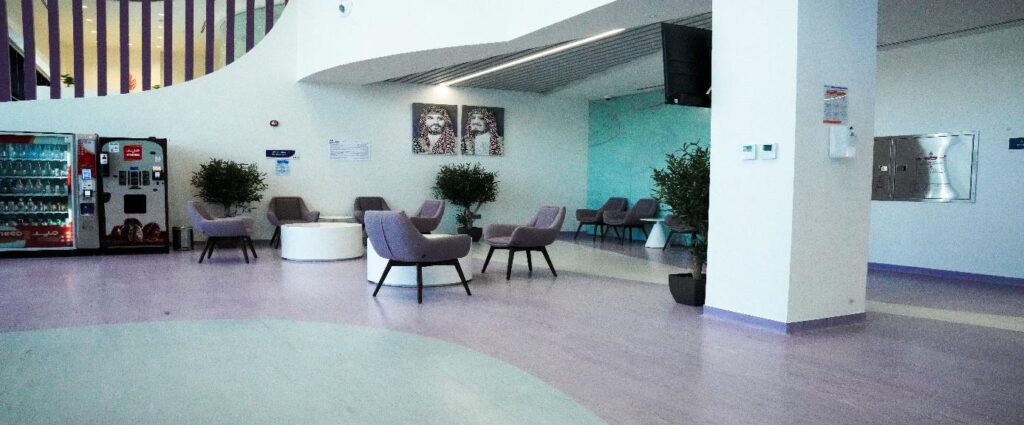
Advantages of Vinyl Flooring in Educational Institutions
Safety First
Vinyl flooring is often equipped with a slip-resistant layer, which reduces fall accidents among students, especially in elementary schools and kindergartens. Its flexible surface also helps absorb shock in cases of falling, making it a completely safe option.
Acoustics and Noise Control
High noise levels in hallways or classrooms may affect concentration and learning quality. Here comes the role of vinyl, known for its ability to absorb sound and reduce noise resulting from foot movement or the shifting of chairs and tables.
Easy Maintenance and Cleaning
Floors in educational institutions are constantly exposed to dust, ink, food stains, and more. Vinyl flooring features a non-porous surface, which makes it easy to clean quickly and prevents the accumulation of dirt or bacteria.
Durability and Strength
Educational vinyl is designed to withstand heavy use and resist wear and scratches caused by the movement of furniture and educational tools. Its long lifespan makes it an economical choice in the long term.
Foot Comfort and Long Standing
Whether for students or teachers, vinyl provides comfort while walking or standing for long periods compared to tiles or other hard flooring types.
Variety of Colors and Designs
Educational vinyl comes in a wide range of colors and patterns that can be used to define specific zones or stimulate creativity among children through a colorful and lively environment.
Types of Vinyl Used in Educational Institutions
Homogeneous Vinyl
Made of a single solid layer of vinyl. It is known for its strength and durability. Ideal for hallways, laboratories, and high-traffic classrooms.
Heterogeneous Vinyl
Made of multiple layers, typically featuring a top layer resistant to stains and scratches and an inner layer that absorbs sound. Suitable for libraries, teacher rooms, and nurseries.
Cushioned Vinyl
Contains a flexible foam layer that provides extra comfort while walking. Often used in kindergartens and playrooms.
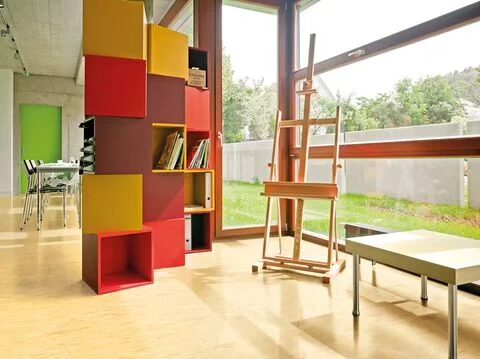
Vinyl and the Healthy Environment in Schools
With the growing awareness of the importance of a healthy environment in educational institutions, educational vinyl stands out as an environmentally friendly and health-safe option when chosen carefully from trusted brands.
Some types of vinyl are manufactured without toxic materials such as phthalates or formaldehyde, making them completely safe even for children with allergies or asthma.
Additionally, vinyl’s resistance to bacteria and mold makes it ideal for environments that require the highest hygiene standards, such as sports halls or art activity rooms.
How to Choose the Right Vinyl for Your Educational Institution?
When selecting educational vinyl flooring, it is recommended to consider:
• The level of usage: hallways? classrooms? sports hall?
• The required slip-resistance rating.
• Hygiene standards and health-safe materials.
• Colors and designs suitable for the age group and educational level.
• Ease of installation and maintenance.
• Brand certification according to international quality standards.
Ideal Floors — Your Trusted Partner for Educational Flooring
Ideal Floors offers a wide range of vinyl flooring specially designed for educational institutions, available in cheerful colors, playful patterns, and modern technologies that guarantee:
• High resistance to wear and scratches.
• Easy cleaning and sanitization.
• Anti-slip properties.
• Safe and eco-friendly materials.
Whether you are equipping a new school or renovating an existing educational institution, you can rely on Ideal Floors to provide flooring that combines safety, durability, and elegance.
Conclusion
The school environment is not just walls and chairs; it is an integrated system that affects the learner’s psychology and behavior. Therefore, the importance of choosing the flooring carefully lies in ensuring learners’ comfort, safety, and ability to focus and learn.
Since educational vinyl flooring combines safety, quality, and cost-effectiveness, it represents today a smart and ideal option for every modern educational institution. And with the expertise of Ideal Floors, you will have a real guarantee of quality that matches the future of your learners

 English (United States)
  Arabic